

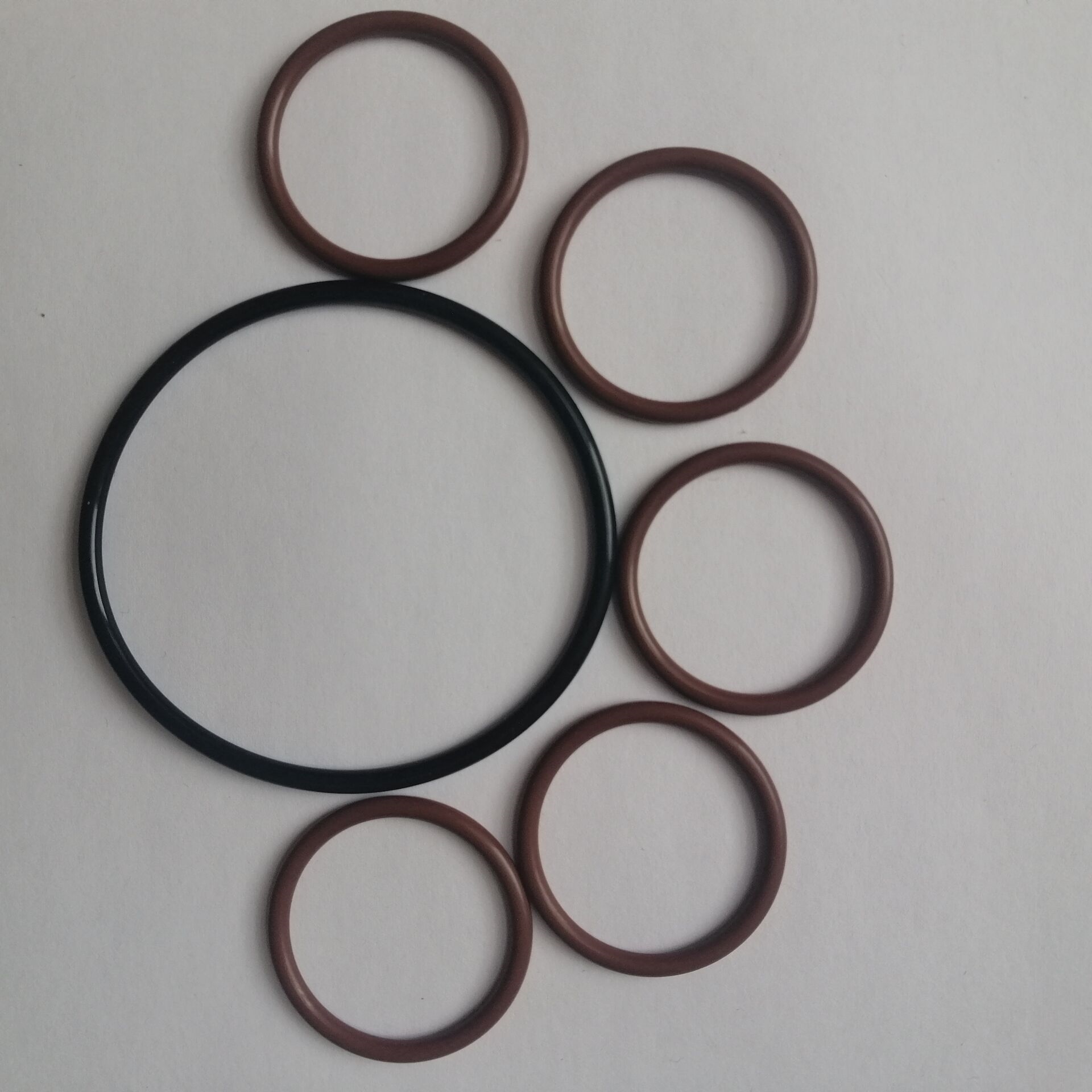
FKM vs NBR O-Rings: Which Rubber Material Is Better for Your Application?
Introduction
Choosing the right O-ring material is critical for sealing performance, equipment reliability, and service life.
Among industrial rubber sealing materials, NBR (Nitrile Rubber) and FKM (Fluoroelastomer) are two of the most commonly used materials.
Both materials provide excellent sealing performance, but they are designed for different working environments.
NBR is widely used for oil and fuel applications with a cost advantage, while FKM provides superior resistance to high temperatures, chemicals, and aggressive fluids.
Understanding the differences FKM vs NBR O-Rings can help engineers and purchasing teams select the right sealing solution.
What Is NBR O-Ring?
NBR, also known as Nitrile Rubber or Buna-N, is one of the most popular sealing materials in industrial applications.
NBR offers excellent resistance to:
- Mineral oils
- Hydraulic fluids
- Fuels
- Greases
Because of its good mechanical properties and competitive price, NBR O-rings are widely used in:
- Hydraulic systems
- Automotive components
- Pneumatic equipment
- Industrial machinery
- General sealing applications
Advantages of NBR O-Rings
- Good oil resistance
- Excellent abrasion resistance
- Good mechanical strength
- Cost-effective solution
- Suitable for mass production
Limitations of NBR
However, NBR has some limitations:
- Limited high-temperature resistance
- Poor resistance to ozone and weather aging
- Not suitable for some aggressive chemicals
Typical operating temperature:
-40°C to +120°C
(depending on formulation)
What Is FKM O-Ring?
FKM, commonly known as Fluoroelastomer or Viton®, is a high-performance rubber material developed for demanding sealing applications.
FKM provides excellent resistance to:
- High temperatures
- Fuels
- Chemicals
- Oils
- Solvents
It is commonly used in industries requiring higher reliability.
Applications include:
- Automotive engines
- Aerospace systems
- Chemical equipment
- Fuel systems
- High-temperature machinery
Advantages of FKM O-Rings
1. Excellent Temperature Resistance
FKM can withstand much higher temperatures compared with NBR.
Typical operating temperature:
-20°C to +200°C
Special grades can withstand even higher temperatures.
2. Superior Chemical Resistance
FKM performs well with:
- Fuel
- Hydraulic oil
- Lubricants
- Solvents
- Chemical fluids
This makes FKM suitable for harsh environments.
3. Longer Service Life
Under high-temperature or chemical conditions, FKM usually provides a longer lifespan compared with NBR.
FKM vs NBR O-Rings Comparison
| Property | NBR O-Ring | FKM O-Ring |
|---|---|---|
| Oil Resistance | Excellent | Excellent |
| Fuel Resistance | Good | Excellent |
| Temperature Resistance | Up to 120°C | Up to 200°C |
| Chemical Resistance | Moderate | Excellent |
| Weather Resistance | Poor | Excellent |
| Mechanical Strength | Excellent | Good |
| Cost | Lower | Higher |
| Typical Use | General Industry | High Performance Applications |
Which O-Ring Material Should You Choose?
The correct choice depends on your working conditions and learn more here at rubber seal material selection guide.
Choose NBR O-Ring When:
NBR is suitable if:
- The application involves mineral oil
- Temperature requirements are moderate
- Cost efficiency is important
- Large quantities are required
Examples:
- Hydraulic seals
- Automotive oil systems
- Pneumatic equipment
Choose FKM O-Ring When:
FKM is recommended when:
- Temperature exceeds 120°C
- Chemical resistance is required
- Fuel exposure exists
- Long service life is important
Examples:
- Engine systems
- Fuel injection systems
- Chemical processing equipment
Cost Considerations
One of the biggest differences between NBR and FKM is cost.
NBR is a general-purpose rubber material and is suitable for many standard applications .
FKM contains fluorine compounds and requires more advanced manufacturing processes, making it significantly more expensive.
However, using FKM can reduce maintenance costs when failure consequences are high.
A lower initial cost does not always mean a lower total cost.
How to Work With a Rubber Seal Manufacturer
A professional rubber seal manufacturer should help customers evaluate:
- Operating temperature
- Chemical exposure
- Pressure conditions
- Compression requirements
- Expected service life
Choosing the correct rubber compound is often more important than simply choosing the cheapest material.
Conclusion of FKM vs NBR O-Rings
Both NBR and FKM O-rings have important roles in industrial sealing applications.
NBR provides an economical and reliable solution for general oil-resistant sealing applications.
FKM provides higher performance when temperature, chemicals, and durability requirements become more demanding.
Before selecting an O-ring material, engineers should carefully evaluate the operating environment and performance requirements.
A reliable rubber seal manufacturer can provide technical guidance and customized sealing solutions to ensure long-term performance and to learn more about FKM vs NBR O-Rings.
Pingback: O-Ring Extrusion Guide: Causes, Prevention & Seal Selection
Pingback: Custom O-Ring Manufacturing: RFQ Guide for Buyers
Pingback: What Causes O-Ring Failure? 7 Common Problems & Solutions
Pingback: O-Ring Squeeze Guide: How to Calculate & Design Rules