

O-Ring Applications: Where Are O-Rings Used in Industry?
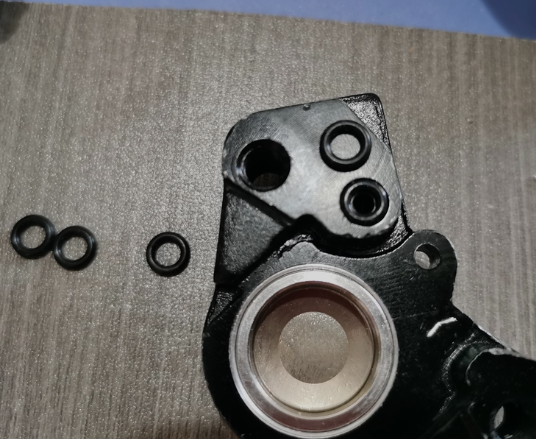
O-rings are among the most widely used sealing components in modern industry. Their simple circular design allows them to provide reliable sealing in a wide range of static and dynamic applications.
From automotive systems and hydraulic equipment to semiconductor manufacturing and household appliances, O-rings can be found in many different types of machinery.
Although O-rings may look similar, the correct material, size, hardness, and compound must be selected according to the application.
This guide explains some of the most common O-ring applications across different industries and the factors that should be considered when selecting an O-ring for each application.
What Are O-Rings Used For?
The primary purpose of an O-ring is to prevent fluids or gases from leaking between two mating surfaces.
O-rings are commonly used to seal:
- Oils and lubricants
- Hydraulic fluids
- Fuels
- Water
- Air
- Refrigerants
- Chemicals
- Vacuum systems
They can be used in both static and dynamic sealing applications.
In a static application, the O-ring normally remains stationary between two components. In a dynamic application, one sealing surface moves relative to the O-ring.
The material and design requirements can be significantly different between these two situations.
1. Automotive O-Ring Applications
The automotive industry is one of the largest users of O-rings.
O-rings are commonly found in:
- Fuel systems
- Oil systems
- Cooling systems
- Air conditioning systems
- Hydraulic systems
- Transmission components
- Pumps and valves
- Sensors and connectors
Automotive O-rings may be exposed to high temperatures, fuels, oils, pressure changes, vibration, and various chemicals.
For this reason, material selection is especially important.
NBR is commonly used for many oil and fuel sealing applications, while FKM may be selected for applications requiring higher temperature or chemical resistance.
The exact material should always be selected according to the actual fluid, temperature, pressure, and service conditions.
2. Hydraulic and Pneumatic O-Ring Applications
Hydraulic equipment relies on seals to contain pressurized fluids.
O-rings are widely used in:
- Hydraulic cylinders
- Hydraulic valves
- Pumps
- Fittings
- Hydraulic manifolds
- Pneumatic cylinders
- Air valves
In hydraulic and pneumatic applications, an O-ring may need to withstand pressure, extrusion forces, friction, and repeated movement.
The correct hardness and installation design are therefore important.
For high-pressure applications, engineers may also use backup rings together with O-rings to reduce the risk of extrusion.
3. Industrial Machinery
O-rings are used throughout industrial machinery because they provide a relatively simple and economical sealing solution.
Typical applications include:
- Pumps
- Valves
- Compressors
- Gearboxes
- Industrial actuators
- Machine tools
- Fluid control equipment
- Process machinery
Industrial equipment may operate with oils, water, compressed air, chemicals, or other fluids.
The O-ring compound should therefore be selected according to the specific operating environment rather than using the same rubber material for every application.
4. Semiconductor Equipment
O-rings also play an important role in semiconductor manufacturing equipment.
Semiconductor processing environments can have demanding requirements related to:
- Vacuum sealing
- Chemical resistance
- Temperature resistance
- Low contamination
- Plasma exposure
- Cleanroom compatibility
O-rings may be used in vacuum chambers, gas delivery systems, pumps, valves, and other equipment.
In these applications, standard industrial O-rings may not be sufficient.
Specialized elastomer compounds and carefully controlled manufacturing processes may be required to meet the performance and cleanliness requirements of semiconductor equipment.
5. Food and Beverage Equipment
O-rings are also used in food processing and beverage equipment.
Applications may include:
- Pumps
- Valves
- Filling equipment
- Processing machines
- Beverage dispensing systems
- Fluid connections
Food-contact applications require materials that comply with the relevant regulations and application requirements.
The correct compound must be selected based on the food or beverage being handled, cleaning procedures, temperature, and regulatory requirements.
6.Refrigeration and HVAC Systems
O-rings are widely used in refrigeration and HVAC equipment.
Typical applications include:
- Refrigerant connections
- Compressors
- Valves
- Expansion systems
- Air conditioning components
- Refrigeration equipment
The sealing material must be compatible with the refrigerant, lubricating oil, temperature range, and pressure conditions.
Material compatibility is especially important because different refrigerants and refrigeration oils can behave differently with elastomers.
7. Pumps and Valves
Pumps and valves depend on reliable sealing to prevent fluid leakage.
O-rings can be found in:
- Valve stems
- Valve bodies
- Pump housings
- Fluid connections
- Cartridge valves
- Check valves
The appropriate O-ring material depends on the fluid being handled.
For example, an O-ring used with water may require a different material from one used with petroleum-based oil or aggressive chemicals.
8. Household Appliances
O-rings are also used in many household O-Ring Applications.
Examples include:
- Washing machines
- Dishwashers
- Coffee machines
- Refrigerators
- Water dispensers
- Vacuum equipment
- Small pumps.

Although these applications may not appear as demanding as automotive or industrial equipment, the sealing requirements can still vary significantly.
Temperature, water exposure, detergents, pressure, vibration, and expected service life should all be considered during material selection.
9. Chemical Processing Equipment
Chemical processing equipment often requires seals with strong resistance to aggressive fluids and elevated temperatures.
O-rings may be used in:
- Chemical pumps
- Valves
- Pipe connections
- Reactors
- Instrumentation
- Fluid control systems
FKM and other specialized elastomers may be considered for certain chemical applications, but no single rubber material is resistant to every chemical.
Chemical compatibility should always be verified using data for the specific compound, chemical, concentration, temperature, and exposure time.
10. Vacuum Sealing Applications
O-rings are also commonly used for vacuum sealing.
O-Ring Applications include:
- Vacuum pumps
- Vacuum chambers
- Laboratory equipment
- Semiconductor equipment
- Industrial vacuum systems
Vacuum applications may have additional requirements related to outgassing, permeability, contamination, and temperature.
The O-ring compound and manufacturing quality can therefore be just as important as the dimensions.
How to Select an O-Ring for an Application
Choosing an o-ring applications should not be based only on its size.
Important factors include:
1. Sealing Medium
Determine what the O-ring will contact.
Examples include:
- Oil
- Water
- Fuel
- Air
- Refrigerant
- Hydraulic fluid
- Chemicals
2. Operating Temperature
Consider both the minimum and maximum operating temperatures.
An elastomer that performs well at room temperature may not provide the same performance at very high or very low temperatures.
3. Pressure
High-pressure applications may require appropriate O-ring hardness, groove design, and backup rings to reduce extrusion risk.
4. Static or Dynamic Sealing
A stationary seal and a moving seal have different requirements.
Dynamic applications may require additional consideration of friction, wear, lubrication, and surface finish.
5. Chemical Compatibility
The selected rubber compound must be compatible with the fluid and operating environment.
For a more detailed discussion of O-ring material selection, see our guide to choosing the right O-ring material.
Why O-Ring Material Matters
Two O-rings with exactly the same dimensions can perform very differently if they are made from different rubber compounds.
Common O-ring materials include:
- NBR
- FKM
- EPDM
- Silicone
- HNBR
- PTFE-based sealing materials
For example, NBR is widely used for oil-resistant applications, while EPDM is often preferred for water, steam, and certain chemical environments.
FKM is frequently selected for demanding high-temperature and fuel-related applications.
Understanding the differences between materials is therefore an essential part of O-ring selection.
You can also read our comparison of NBR and EPDM O-rings to understand how these two common materials differ.
Common Causes of O-Ring Failure
Even when the correct general material is selected, an O-ring can fail because of other factors.
Common causes include:
- Incorrect material selection
- Excessive temperature
- Excessive pressure
- Chemical incompatibility
- Extrusion
- Compression set
- Abrasion
- Incorrect installation
- Poor surface finish
- Incorrect groove dimensions
For more information, see our guide to common O-ring failures.
Conclusion
O-rings are used in a wide range of industries because they provide a simple, reliable, and cost-effective sealing o-ring applications solution.
From automotive and hydraulic systems to semiconductor equipment, refrigeration systems, industrial machinery, and household appliances, O-rings help prevent the leakage of liquids and gases.
However, selecting the right O-ring requires more than choosing the correct size.
The application, sealing medium, temperature, pressure, movement, chemical exposure, and expected service life should all be considered before selecting the material and compound.
For demanding applications, working with an experienced rubber seal manufacturer can help ensure that the O-ring is properly matched to the operating environment.
Pingback: O-Ring Squeeze Guide: How to Calculate & Design Rules