

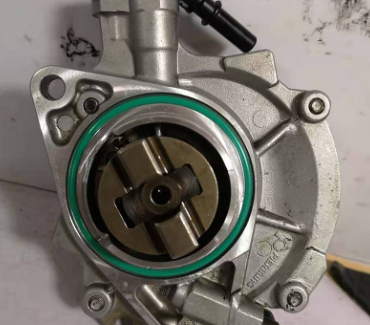
What Causes O-Ring Failure? 7 Common Problems and How to Fix Them
O-rings fail in two ways: they leak slowly over months, or they fail suddenly and shut down equipment. Either way, the root cause is almost always one of a short list of problems — wrong material, wrong size, wrong groove design, or wrong installation.
The frustrating part is that most O-ring failures are preventable. In our experience working with industrial buyers, more than 80% of premature seal failures trace back to a decision made before the seal was ever installed: the material spec, the groove dimensions, or the procurement process.
This guide walks through the 7 most common O-ring failure modes, what each one looks like when you inspect the failed seal, what causes it, and — most importantly — how to prevent it. If you can read a failed O-ring correctly, you can usually fix the problem permanently.
Quick Diagnosis Table: Match Your Failed Seal to the Cause
| What You See on the Seal | Likely Failure Mode | Jump to Section |
|---|---|---|
| Flat, flattened sides; permanent deformation | Compression set | #compression-set |
| Cracks, hard and brittle surface | Heat / ozone degradation | #temperature |
| Swollen, larger and softer than original | Chemical incompatibility | #chemical |
| Shaved or nicked edge, spiral line around seal | Installation damage | #installation |
| Flat band worn on one side | Extrusion or abrasion | #extrusion |
| Surface blistering or rapid explosive decompression damage | Pressure / gas decompression | #extrusion |
1. Wrong Material Selection
The single most common cause of O-ring failure is also the simplest: the seal material does not match the working environment.
Every elastomer has a “comfort zone.” Step outside it, and failure is only a matter of time:
- NBR (Nitrile) handles oils and fuels well, but degrades quickly in ozone, sunlight, and hot water. An NBR seal on outdoor equipment can crack within months.
- EPDM is excellent for water, steam, and weather exposure — but swells and falls apart in petroleum oils and fuels. EPDM in a hydraulic line fails fast.
- FKM (Viton) resists heat and chemicals, but is a poor choice for hot water, steam, and some phosphate ester fluids.
- Silicone handles extreme temperatures but has low tear strength — wrong choice for dynamic, high-abrasion applications.
How to prevent it: Before ordering any seal, write down four things: maximum/minimum temperature, the fluids it touches (including cleaning agents), whether the sealing is static or dynamic, and expected service life. Then match the material — our O-ring material selection guide covers the decision process in detail. For a direct comparison of the two most common choices, see NBR vs EPDM and our FKM vs NBR comparison.
2. Excessive Temperature
Heat is the silent killer of O-rings. Every elastomer has a maximum continuous operating temperature, and every 10°C above the recommended limit roughly halves the seal’s expected life — this is the same acceleration rule that governs rubber aging generally.
Typical continuous temperature limits by material:
| Material | Practical Continuous Limit | Failure Signs When Overheated |
|---|---|---|
| NBR | ~100–120°C | Hardening, cracking, compression set |
| EPDM | ~130–150°C | Brittle fracture |
| FKM | ~200°C (short peaks higher) | Surface crazing, shrinkage |
| Silicone (VMQ) | ~200–230°C | Tear propagation |
How to read an overheated seal: the surface becomes hard and glossy, may show radial cracks, and the seal takes a permanent set in the groove. If the failed seal is hard enough that it resists bending, heat is almost certainly involved.
How to prevent it: don’t spec a material for the “normal” temperature — spec it for the worst-case temperature, including heat build-up near pumps, exhausts, and compressors.
3. Chemical Attack
Chemical incompatibility usually shows up as swelling: the seal comes out larger, softer, and heavier than it went in. Once volume swell exceeds roughly 10–15%, sealing force and extrusion resistance degrade rapidly.
The fluids buyers most often forget to check:
- Cleaning agents and disinfectants (in food and medical equipment — many attack NBR)
- Amine additives in modern hydraulic fluids
- Refrigerant oils in HVAC systems
- Steam and hot water — which destroy FKM but suit EPDM
How to prevent it: always verify chemical compatibility against the full fluid list, not just the main process fluid. Reputable suppliers publish compatibility charts; independent references such as the Parker O-Ring Handbook and published ISO 3601 material standards are reliable starting points. When in doubt, request a material test report (including volume swell data) from your supplier — a serious manufacturer will provide one without being asked twice.
4. Installation Damage
Many O-rings are killed before the machine ever runs. Typical installation errors:
- Sharp edges and threads — pushing the seal over unmachined corners or thread burrs nicks the surface
- Twisting — rolling the seal into the groove creates a spiral twist that becomes a leak path under pressure
- Dry assembly — no lubrication means high friction, tearing, and pinching during assembly
- Over-stretching — stretching a seal more than ~50% beyond its natural ID damages the cross-section permanently
How to prevent it: chamfer or round all assembly edges, use a compatible lubricant (petroleum grease is fine for NBR — never use it on EPDM), and install the seal over threads using a bullet-nosed assembly sleeve. For the full checklist, see our O-ring installation guide.
5. Compression Set
Compression set is the percentage of original squeeze that the seal fails to recover. A seal with 50% compression set has permanently flattened — contact pressure drops, and leakage follows.
It’s caused by the combination of heat + time + squeeze. The three levers you can pull:
- Material choice: high-quality compounds publish compression set values (e.g. “compression set 22h @ 175°C < 25%”). Cheap compounds often fail this test badly.
- Temperature: as above — keep the real temperature within the material’s limit.
- Groove design: excessive squeeze (above ~30% for static seals, ~20% for dynamic) accelerates set. Correct squeeze values depend on cross-section — our O-ring squeeze guide explains the numbers.
How to read it: a compression-set seal looks flattened, oval, or squared-off. Measure the cross-section of the failed seal and compare with the spec — if it’s visibly thinner, compression set (or extrusion) is your answer.
6. Extrusion and Pressure Damage
Under pressure, the soft rubber is pushed into the clearance gap between the metal parts. Repeated cycles chew a nibbled, “bitten” edge into the downstream side of the seal — and eventually pieces break off.
Three factors control extrusion: pressure, clearance gap, and hardness. Common fixes:
- Reduce the clearance gap (tighter machining tolerances)
- Increase compound hardness (e.g. 90 Shore A instead of 70)
- Add back-up rings on the low-pressure side — for gaps above ~0.1–0.2 mm at pressures above ~100 bar, back-up rings are standard practice (see our back-up ring guide)
A related failure mode in gas and rapid decompression applications is explosive decompression (ED/RGD): gas absorbed into the rubber expands violently when pressure drops, blistering the surface. For gas service, use ED-resistant compounds — this is specified explicitly in oil & gas applications.
For a deeper look at this mechanism, see our O-ring extrusion guide.
7. Abrasion and Surface Damage
In dynamic applications (rod and piston seals), friction wears a flat band onto the seal surface. Contamination — dirt, metal chips, weld spatter in the fluid — acts as grinding paste and accelerates wear dramatically.
Prevention basics:
- Keep the system clean; specify filtration appropriate to the application
- Check surface finish: dynamic sealing surfaces typically need Ra ≤ 0.4 µm; too smooth is also bad (no lubricant film)
- For long stroke or high-frequency dynamic duty, consider low-friction compounds or PTFE-infused designs
- Inspect groove and mating surfaces for machining burrs — a rough groove destroys seals quietly (see groove design guide)
How to Turn a Failure into a Permanent Fix: A 5-Step Routine
- Collect the evidence. Photograph the failed seal in place, before removing it. Note the operating conditions at failure (temperature, pressure, how long it lasted).
- Read the seal. Use the diagnosis table above. Flat = compression set; hard & cracked = heat; swollen = chemical; nicked = installation; nibbled edge = extrusion.
- Check the spec, not the memory. Compare actual groove dimensions and material against the drawing. Half of all “mystery” failures are a wrong seal in the box — measure the replacement before installing it (see our O-ring size guide and tolerance guide).
- Fix the cause, not the symptom. If heat killed the seal, upgrading the material buys time but doesn’t solve the problem. Ask why the temperature exceeded spec.
- Verify with the supplier. A competent seal manufacturer will ask for your working conditions and confirm the material choice before quoting. If your supplier never asks about temperature or media, that itself is a warning sign — our guide on choosing a rubber seal manufacturer covers what to expect.
Frequently Asked Questions
What is the most common cause of O-ring failure?
Wrong material selection for the working environment — typically temperature or chemical mismatch. The second most common is installation damage.
What does an O-ring failure look like?
It depends on the cause: flattening indicates compression set, hardening and cracks indicate heat, swelling indicates chemical attack, and a nibbled or shaved edge indicates extrusion or installation damage.
How often should O-rings be replaced?
There is no universal interval. It depends on material, temperature, and duty cycle. Best practice is to set replacement intervals from observed condition (hardness, compression set) rather than fixed calendar time — and always replace during scheduled overhaul of critical equipment.
Can I use a harder O-ring to stop leaking?
Not always. Harder compounds resist extrusion at high pressure, but reduce conformability at low pressure. Match hardness to the pressure range and use back-up rings where needed.
How do I know which material failed and why?
Send the failed seal to your supplier. A capable manufacturer can identify the compound, measure compression set and volume swell, and usually name the failure mode from photos and service conditions alone.
Need Custom O-Ring Solutions?
DRFPART manufactures custom O-rings, rubber seals, diaphragms, and molded rubber components for industrial and OEM applications. If you’re troubleshooting a recurring seal failure, send us the failed part and your working conditions — we’ll identify the failure mode and recommend a material solution, free of charge.
Get a free failure analysis or custom quote: contact our engineering team. You can also browse our full range of custom O-ring manufacturing capabilities and our rubber sealing products.
Pingback: O-Ring Extrusion Guide: Causes, Prevention & Seal Selection