

Custom O-Ring Manufacturing: What to Specify Before Requesting a Quote
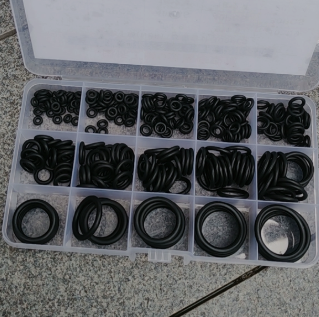
Custom O-rings are widely used in industrial equipment, fluid control systems, automotive components, home appliances, pumps, valves, and other applications where reliable sealing is essential.
Unlike standard O-rings, custom rubber seals may require special dimensions, non-standard materials, specific hardness, tighter tolerances, or application-specific performance requirements.
However, a custom O-ring project does not start with manufacturing. It starts with understanding the application and defining the technical requirements.
If important information is missing at the quotation stage, buyers may receive inaccurate prices, unsuitable material recommendations, or samples that do not fit the actual assembly.
This guide explains what engineers and purchasing teams should prepare before requesting a quotation for custom O-rings.
1. Provide the O-Ring Drawing or Dimensions
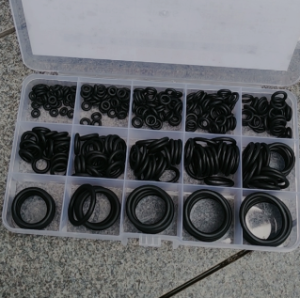
The first step is to identify the required O-ring dimensions.
The two primary dimensions are:
- Inside diameter (ID): The diameter of the opening inside the O-ring.
- Cross-section (CS): The thickness of the rubber ring.
If available, provide a technical drawing with the required dimensions and tolerances.
For an existing O-ring, buyers can also provide a sample for measurement and evaluation. However, a physical sample alone may not reveal the original design requirements, material grade, or acceptable manufacturing tolerances.
For more information about measuring and specifying O-rings, see our O-Ring Size Guide.
If your application requires precise dimensional control, our guide to O-Ring Tolerance explains why dimensional variation matters in sealing applications.
2. Specify the Rubber Material
Material selection is one of the most important decisions in custom O-ring manufacturing.
The correct material depends on the fluid being sealed, operating temperature, pressure, environmental exposure, and expected service life.
Common materials include:
- NBR (Nitrile Rubber): Frequently used for oils, fuels, and general industrial sealing applications.
- EPDM: Commonly selected for water, steam, weathering, and certain chemical environments.
- FKM: Often used where higher temperature resistance and compatibility with oils or fuels are required.
- Silicone (VMQ): Used in applications requiring flexibility across a range of temperatures.
- HNBR: Considered for applications requiring improved heat, oil, and mechanical performance compared with conventional NBR compounds.
These are general characteristics, not universal guarantees. Actual performance depends on the specific rubber compound and operating conditions.
For a more detailed comparison, read our guides to O-Ring Material Selection, NBR vs. EPDM O-Rings, and FKM vs. NBR O-Rings.
When requesting a quotation, specify the required material if it is already defined by your engineering team. If the material is not yet determined, provide the application details so the manufacturer can evaluate suitable options.
3. Confirm the Required Hardness
Rubber hardness affects how an O-ring deforms under compression and responds to pressure, installation, and movement.
Hardness is commonly expressed using the Shore A scale.
For example, 70 Shore A is a common hardness specification for many general-purpose O-ring applications. However, it is not suitable for every design.
A softer compound may be appropriate for certain low-pressure applications or assemblies with specific sealing requirements. A harder compound may offer better resistance to deformation or extrusion under some conditions.
Hardness should not be selected independently of material, pressure, groove geometry, and assembly design.
When requesting a quotation, specify the required hardness and its tolerance if known. If the drawing only identifies the polymer family, ask whether the manufacturer can recommend an appropriate compound and hardness for the application.
4. Explain the Operating Environment
A rubber compound that performs well in one application may fail prematurely in another.
To evaluate a custom O-ring correctly, provide the following information whenever possible:
- Working medium: Water, oil, fuel, air, refrigerant, cleaning solution, or another fluid.
- Operating temperature: Normal temperature and expected minimum and maximum temperatures.
- Pressure: Normal operating pressure and maximum pressure.
- Movement: Static sealing, reciprocating motion, rotary motion, or oscillating motion.
- Exposure conditions: Outdoor weather, ozone, chemicals, cleaning agents, or other environmental factors.
These details help the manufacturer evaluate material compatibility and potential failure mechanisms.
For example, an O-ring used in a water pump may have different material requirements from one used in an oil circuit, even if the two rings have identical dimensions.
Our article on Common O-Ring Failures explains how unsuitable materials, excessive temperature, compression set, abrasion, and other factors can contribute to sealing problems.
5. Provide the Groove or Housing Information
An O-ring cannot be evaluated only as an independent rubber component. Its performance also depends on the surrounding hardware.
If available, provide the groove drawing or relevant dimensions, including:
- Groove width and depth.
- Groove diameter.
- Mating surface dimensions.
- Assembly clearances.
- Relevant surface finish requirements.
- Pressure direction and expected operating conditions.
These details are particularly important when developing a new sealing design or replacing an existing seal that has experienced leakage.
An incorrect groove can lead to insufficient compression, excessive deformation, installation damage, or extrusion under pressure.
If the groove has not yet been designed, consult our guides to O-Ring Groove Design and O-Ring Squeeze.
For higher-pressure applications, the design may also need to consider whether an anti-extrusion device is appropriate. See our guide to O-Ring Back-Up Rings.
6. Define Dimensional Tolerances and Quality Requirements
Custom O-rings may require tighter dimensional control than standard commercial products.
Before placing an order, clarify which characteristics are critical to the application.
These may include:
- Inside diameter and cross-section.
- Dimensional tolerances.
- Hardness.
- Visual appearance.
- Flash and parting-line requirements.
- Surface defects or contamination.
- Material identification and traceability.
- Inspection and documentation requirements.
Not every application requires the same inspection level. A general industrial seal may have different requirements from a component used in a safety-critical or highly regulated system.
If your company has an approved drawing, quality specification, or inspection standard, provide it before quotation and sampling.
It is also important to distinguish between requirements that are mandatory and those that are preferred. This helps the manufacturer evaluate feasibility and quote the correct production process.
7. Clarify Annual Demand and Order Quantity
Quantity affects tooling decisions, production planning, inspection costs, and unit price.
When requesting a quotation, provide the expected initial order quantity and estimated annual demand if available.
For example, a buyer may need:
- A small quantity for prototype evaluation.
- A pilot batch for assembly testing.
- A regular production order.
- Long-term supply for a product manufactured over several years.
These scenarios can require different commercial arrangements.
A custom O-ring may need a dedicated mold, depending on its geometry and the manufacturer’s existing tooling. The buyer should therefore ask whether tooling costs apply, who owns the tooling, and whether future orders can use the same mold.
If the design is still under development, clarify whether the supplier can support prototype samples before mass production.
A low initial quantity does not always mean the project is unsuitable for custom manufacturing, but the supplier needs to understand the expected business opportunity before proposing a production solution.
8. Confirm Sample Approval and Production Requirements
For a new custom O-ring, sample approval is an important step before mass production.
A practical development process may include:
- Review the application and technical requirements.
- Confirm dimensions, material, hardness, and tolerances.
- Review tooling requirements and quotation.
- Produce initial samples.
- Inspect and evaluate the samples.
- Test the samples in the actual assembly where necessary.
- Approve the final specifications before mass production.
The exact process depends on the product and application.
For example, a dimensional inspection alone may be sufficient for an uncomplicated replacement part, while a new sealing design may require assembly testing, pressure testing, or material validation.
Buyers should also confirm whether the approved sample becomes the reference standard for future production and how changes to material or manufacturing processes will be controlled.
For practical guidance on preventing assembly-related problems, see our article on O-Ring Installation.
9. Ask About Tooling, Lead Time, and Long-Term Supply
Technical suitability is only one part of a successful custom O-ring project. Commercial and production arrangements also need to be clear.
Before placing an order, ask the manufacturer about:
- Tooling or mold costs.
- Sample lead time.
- Mass-production lead time.
- Minimum order quantity.
- Packaging requirements.
- Inspection documentation.
- Tooling ownership and storage.
- Reorder availability and production consistency.
For OEM buyers, long-term supply capability is particularly important. A supplier should be able to explain how approved specifications will be maintained across repeat orders.
When comparing manufacturers, do not evaluate the quotation based on unit price alone. Consider technical communication, quality control, sample performance, production capacity, and the ability to support future requirements.
Our guide to How to Choose a Rubber Seal Manufacturer provides additional points to consider when evaluating a potential supplier.
10. What to Include in a Custom O-Ring RFQ
A clear request for quotation helps suppliers evaluate the project more accurately and reduces unnecessary communication.
Use the following checklist when preparing your RFQ.
| Item | Information to Provide |
|---|---|
| Drawing or dimensions | Inside diameter, cross-section, and tolerances |
| Material | Required compound or application details |
| Hardness | Shore A value and tolerance, if specified |
| Working medium | Fluid or gas in contact with the seal |
| Temperature | Minimum, normal, and maximum operating temperatures |
| Pressure | Normal and maximum operating pressure |
| Application | Static, reciprocating, rotary, or other service |
| Groove details | Groove drawing or relevant housing dimensions |
| Quality requirements | Inspection, traceability, and documentation |
| Quantity | Sample quantity, initial order, and estimated annual demand |
| Tooling | Existing mold or new tooling requirements |
| Delivery | Required sample date and production schedule |
If some information is unavailable, state this clearly rather than guessing. A qualified manufacturer may help identify the missing information needed to evaluate the project.
11. Common Mistakes When Requesting Custom O-Rings
Several mistakes can delay development or lead to unsuitable quotations.
Providing dimensions without application details
The same size O-ring can require different materials depending on the fluid, temperature, and pressure.
Selecting material based only on price
A lower-cost material may have a shorter service life or be incompatible with the working medium.
Ignoring groove design
Even a correctly manufactured O-ring may leak if the groove dimensions or compression are unsuitable.
Failing to define tolerances
Without agreed dimensional requirements, the buyer and supplier may have different expectations for acceptance.
Approving samples without considering actual operating conditions
A sample that fits during a basic assembly check may still require further testing under operating pressure, temperature, or movement.
Leaving long-term supply requirements unclear
Tooling ownership, repeat-order consistency, and change control should be discussed before mass production begins.
Avoiding these mistakes helps both the buyer and manufacturer establish a clearer development process.
Conclusion
Successful custom O-ring manufacturing requires more than matching a diameter and cross-section. It involves understanding the application, selecting a suitable rubber compound, confirming dimensional and groove requirements, defining quality standards, and agreeing on sample approval and production arrangements.
For OEM manufacturers, equipment builders, and industrial purchasing teams, a well-prepared RFQ can reduce development delays, improve quotation accuracy, and help prevent avoidable sealing problems.
At DRFPART, we focus on custom rubber components and sealing solutions for industrial applications. If you are developing a new O-ring or looking for a replacement for an existing component, providing a drawing, sample, operating conditions, and estimated quantity is a useful starting point for technical evaluation and quotation.
Pingback: What Causes O-Ring Failure? 7 Common Problems & Solutions
Pingback: O-Ring Size Guide: How to Measure ID, OD & Cross-Section | DRFPART