
What Is an O-Ring and How Does It Work? A Complete Guide
Introduction
An O-ring is one of the most widely used sealing components in industrial applications. Due to its simple design, reliable sealing performance, and cost effectiveness, O-rings are commonly found in hydraulic systems, pneumatic equipment, automotive components, home appliances, medical devices, and industrial machinery.
Although an O-ring looks like a simple rubber ring, choosing the correct material, size, and design is essential to achieve reliable sealing performance.
This article explains what an O-ring is, how it works, common materials, applications, and how to select the right O-ring for your project.
What Is an O-Ring?
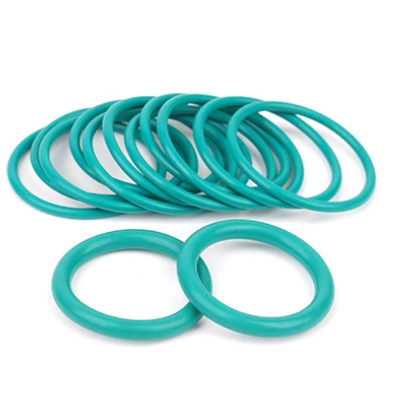
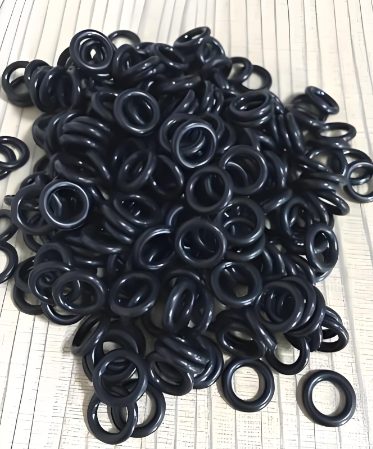
An O-ring is a circular sealing ring with a round cross-section. It is usually manufactured from elastomer materials such as NBR, EPDM, FKM (Viton), silicone, or other rubber compounds.
The main purpose of an O-ring is to prevent leakage between two connected parts.
O-rings are commonly installed in:
- Hydraulic cylinders
- Pumps and valves
- Automotive systems
- Refrigeration equipment
- Washing machines
- Coffee machines
- Food processing equipment
- Industrial machinery
Because of their simple structure and excellent sealing ability, O-rings have become one of the most popular sealing solutions worldwide.
How Does an O-Ring Work?
The working principle of an O-ring is based on elastic deformation .
When an O-ring is installed into a groove, it is slightly compressed between two surfaces. This compression creates contact pressure between the rubber seal and the sealing surfaces.
When internal pressure increases, the pressure pushes the O-ring against the groove and sealing surface, improving the sealing effect.
The sealing process includes:
1. Initial Compression
Before the equipment operates, the O-ring is already compressed inside the groove.
This creates the initial sealing force.
2. Pressure Activation
When fluid or gas pressure increases, the O-ring deforms slightly and pushes harder against the sealing surfaces.
This helps prevent leakage.
3. Elastic Recovery
The rubber material continuously tries to return to its original shape, maintaining sealing performance during operation.
Common O-Ring Materials
Different applications require different rubber materials.
NBR O-Rings (Nitrile Rubber)
NBR is one of the most commonly used O-ring materials.
Advantages:
- Excellent oil resistance
- Good mechanical strength
- Cost effective
Typical applications:
- Hydraulic systems
- Automotive parts
- General industrial equipment
EPDM O-Rings
EPDM provides excellent resistance to:
- Water
- Steam
- Weather
- Ozone
Typical applications:
- Washing machines
- Water systems
- Home appliances
- Outdoor equipment
FKM O-Rings (Viton)
FKM offers excellent:
- High temperature resistance
- Chemical resistance
- Fuel resistance
Typical applications:
- Automotive systems
- Chemical equipment
- High temperature environments
Silicone O-Rings
Silicone rubber is widely used where flexibility and temperature resistance are important.
Applications:
- Food equipment
- Medical devices
- Electronics
Common O-Ring Applications
O-rings are used in thousands of industries.
Automotive Industry
Examples:
- Engine systems
- Fuel systems
- Air conditioning systems
Home Appliances
Examples:
- Washing machines
- Coffee machines
- Refrigerators
Industrial Equipment
Examples:
- Pumps
- Valves
- Hydraulic equipment
Food and Medical Industries
Special materials may be required to meet:
- Food contact requirements
- FDA regulations
- Hygiene standards
How to Select the Right O-Ring?
When selecting an O-ring,What Is an O-Ring, engineers should consider:
1. Operating Temperature
Different rubber materials have different temperature limits.
For example:
- EPDM performs well in hot water and steam applications.
- FKM is suitable for higher temperatures.
2. Chemical Compatibility
The sealing material must resist contact with:
- Oil
- Water
- Chemicals
- Refrigerants
3. Pressure Conditions
High-pressure applications may require:
- Harder rubber compounds
- Backup rings
- Special groove designs
4. Application Environment
Consider:
- Static sealing or dynamic sealing
- Indoor or outdoor use
- Food contact requirements
Why Choose a Professional O-Ring Manufacturer?
A reliable manufacturer should provide:
- Correct material selection
- Stable production quality
- Dimensional control
- Testing capability
- Customized rubber compounds
A small difference in rubber formulation or production process can significantly affect sealing performance and to underwhat What Is an O-Ring,you may also contact us for O-ring material selection guide
Conclusion
What Is an O-Ring ,O-rings are simple but highly important sealing components used in countless applications worldwide.
Selecting the correct O-ring requires understanding:
- Material properties
- Operating conditions
- Application requirements
- Manufacturing quality
With proper design and material selection, O-rings can provide reliable and long-lasting sealing performance.
DRFPART provides customized rubber sealing solutions including O-rings for better understand of What Is an O-Ring and other rubber components for industrial applications to avoid common O-ring failures.